
Yogyakarta Tourism Guide

Discover Yogyakarta:
The Cultural Heart of Java
Experience ancient UNESCO temples, royal palaces, vibrant street art, and legendary culinary heritage in Indonesia's most enchanting city.
Steeped in ancient history and rich Javanese traditions, Yogyakarta (affectionately known as Jogja) is the soul of Indonesia. As the only region in Indonesia still formally governed by a pre-colonial monarchy, the city holds fiercely to its heritage while welcoming modernity. For travelers from Malaysia, South Korea, Japan, the Middle East, and Australia, Jogja offers an unparalleled journey through UNESCO World Heritage sites, majestic landscapes, and deep-rooted cultural arts.
Best Places to Visit in Yogyakarta (Jogja) for First-Time Travelers
Deciding where to begin in a city overflowing with history can be a challenge. First-time visitors should start their journey at the epicenter of Javanese culture: the Kraton (Sultan's Palace). This living museum provides a profound look into the royal heritage that still dictates much of the city's rhythm today.
Just a short walk from the palace is the captivating Taman Sari, also known as the Water Castle. Once a lavish royal garden and bathing complex for the Sultan, its intricate architecture and underground tunnels make it one of the most photogenic and historically fascinating spots in the city.
Yogyakarta Tour Package 3 Days 2 Nights: A Quick Getaway
If you are short on time, a compact itinerary is essential. A well-planned three-day trip allows you to witness the highlights without feeling rushed. On your first day, land at the new Yogyakarta International Airport (YIA) and head straight to the city center for a cultural immersion at the Kraton and a relaxed evening stroll.
Dedicate your second day entirely to the ancient temples, capturing the magnificent sunrise and sunset. Finally, use your third day to hunt for souvenirs, enjoy local coffee shops, and pack your bags with unforgettable memories before your flight out.
Top Yogyakarta Tourist Attractions and Ancient Temples
Beyond the city limits, the landscape surrounding Yogyakarta is dotted with ancient wonders and natural phenomena. Mount Merapi, one of Indonesia's most active stratovolcanoes, looms over the city. A Merapi Lava Tour by 4x4 jeep is an adrenaline-pumping way to explore the rugged terrain left behind by previous eruptions.
For those seeking tranquility, the Pine Forest in Mangunan (Hutan Pinus Mangunan) offers misty, cool mornings perfect for escaping the tropical heat. The stunning cliffside views at Kalibiru National Park also provide breathtaking photo opportunities overlooking Lake Sermo.
Borobudur and Prambanan Temple Tours: A Journey Through Time
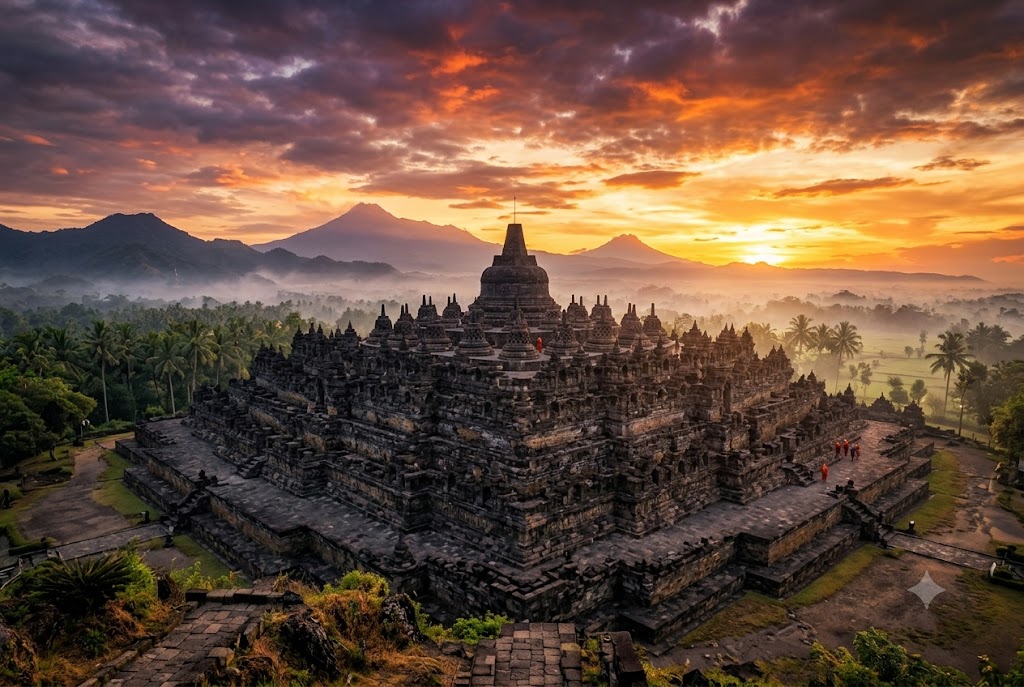
The crown jewels of Central Java's tourism are undeniably the UNESCO World Heritage sites of Borobudur and Prambanan. Borobudur, the world’s largest Buddhist temple, is an architectural marvel. Walking up its symmetrical tiers at dawn to watch the sunrise over the misty Kedu Valley is a spiritual experience beloved by tourists globally.
In contrast, Prambanan is a towering Hindu temple complex characterized by its tall, jagged architecture. Built in the 9th century, it is dedicated to the Trimurti (Shiva, Vishnu, and Brahma). Watching the traditional Ramayana Ballet performed on an open-air stage with the illuminated Prambanan temples in the background is an absolute must-do.
Yogyakarta Itinerary 4 Days 3 Nights for In-Depth Exploration
For a more relaxed pace, adding an extra day to your trip unlocks the southern wonders of the region. After dedicating two days to temples and city culture, journey south to the Gunung Kidul regency. This area is famous for its stunning white-sand beaches bordering the Indian Ocean, such as Indrayanti and Timang Beach.
You can also explore Jomblang Cave, where an exhilarating vertical descent leads you into an ancient forest and a magnificent subterranean cavern bathed in "heavenly light." This natural wonder has become a massive hit among adventure seekers from Australia and Korea.
Must-Try Traditional Food in Yogyakarta Culinary Tours
Yogyakarta's culinary scene is deeply tied to its history, known primarily for its sweet and savory flavor profiles. The most iconic dish is Gudeg, a slow-cooked stew made from young jackfruit, coconut milk, and palm sugar. It is rich, flavorful, and a staple for locals and tourists alike.
Because the region is overwhelmingly Muslim, finding delicious, certified halal food is incredibly easy for Middle Eastern and Malaysian travelers. Do not miss out on Sate Klathak, unique mutton skewers roasted over hot coals using iron bicycle spokes, which perfectly cook the meat from the inside out.
Shopping in Malioboro Street Yogyakarta and Local Markets
No trip to Jogja is complete without a visit to the legendary Malioboro Street. As the sun sets, this bustling avenue comes alive with street musicians, artists, and hundreds of vendors selling traditional Batik fabrics, handcrafted leather goods, and intricate silver jewelry sourced from the nearby Kotagede district.
If you prefer a traditional market experience, step into Beringharjo Market, located just off Malioboro. It is the oldest market in the Kraton area and the absolute best place to buy beautiful, authentic Batik in bulk at wholesale prices—just remember to bring your bargaining skills!
Where to Stay in Yogyakarta: Best Hotels and Resorts for Every Budget
Yogyakarta offers a diverse range of accommodations to suit every traveler. If you want to be in the heart of the action, staying in hotels around the Malioboro area ensures you are just steps away from shopping and street food. This area is highly recommended for those who love night walks and city vibes.
Alternatively, for a luxurious and peaceful retreat, look for heritage resorts located on the outskirts of the city or near the temples. Many high-end eco-resorts offer stunning views of Mount Merapi or lush paddy fields, providing a serene Javanese spa experience that perfectly balances the busy days of sightseeing.
Frequently Asked Questions
Essential information for your Yogyakarta trip, curated based on top traveler inquiries.
1. What is the best time to visit Yogyakarta?
The best time to visit Yogyakarta is during the dry season, from May to September. This ensures clear skies for sunrise tours at Borobudur and comfortable weather for temple hopping.
2. How many days should I spend in Yogyakarta?
A 3 to 4-day trip is ideal. It gives you enough time to visit Borobudur, Prambanan, explore the city center (Keraton and Malioboro), and perhaps take a nature trip to Mount Merapi or the southern beaches.
3. How far is Borobudur Temple from Yogyakarta?
Borobudur Temple is located in the neighboring Magelang regency, approximately 40 kilometers northwest of Yogyakarta. It typically takes about 1 to 1.5 hours to drive there from the city center.
4. Is Yogyakarta safe for international tourists?
Yes, Yogyakarta is considered one of the safest cities in Indonesia for tourists. The locals are exceptionally friendly and welcoming. Just maintain standard precautions with belongings in crowded areas like Malioboro.
5. Can I visit Borobudur and Prambanan in one day?
Yes, combining both temples in a single day is a very popular itinerary. A common route is doing the Borobudur sunrise tour early in the morning, taking a break for lunch, and visiting Prambanan in the afternoon for sunset.
6. Do people in Yogyakarta speak English?
Yes, English is widely spoken in tourist areas, major hotels, tour agencies, and popular cafes, making it very easy for international tourists to communicate and get around.
7. What is the best way to get around Yogyakarta?
For short distances within the city, ride-hailing apps like Grab and Gojek are perfect and affordable. For out-of-town trips to temples or beaches, renting a private car with a driver for the day is the most convenient option.
8. Are there halal food options in Yogyakarta?
Absolutely. Since the vast majority of the population is Muslim, nearly all local restaurants, street food stalls, and cafes in Yogyakarta serve strict halal food, making it extremely Muslim-friendly.
9. What is the traditional food of Yogyakarta?
The most famous traditional dish is Gudeg, a sweet stew made from young jackfruit cooked for hours in coconut milk and palm sugar, usually served with rice, chicken, and a boiled egg.
10. Where is the best place to buy souvenirs in Jogja?
Malioboro Street and Beringharjo Market are the absolute best spots for souvenirs. You can find everything from authentic Batik clothing and silver crafts to local snacks like Bakpia Pathok.
Plan Your Dream Yogyakarta Vacation Today!
Contact our travel experts via WhatsApp to customize your itinerary, check tour packages, and book your unforgettable journey in the Cultural Heart of Java.
Fast Response Guaranteed